
Circuit breakers are essential components in electrical systems, protecting circuits from overloads and short circuits. Two of the most commonly used protection devices are Miniature Circuit Breakers (MCB) and Molded Case Circuit Breakers (MCCB).
Although both serve similar protection functions, they differ significantly in current capacity, adjustability, application scenarios, and protection performance.
Understanding the difference between MCB and MCCB helps engineers, electricians, and facility managers select the right circuit protection device for residential, commercial, and industrial electrical systems.
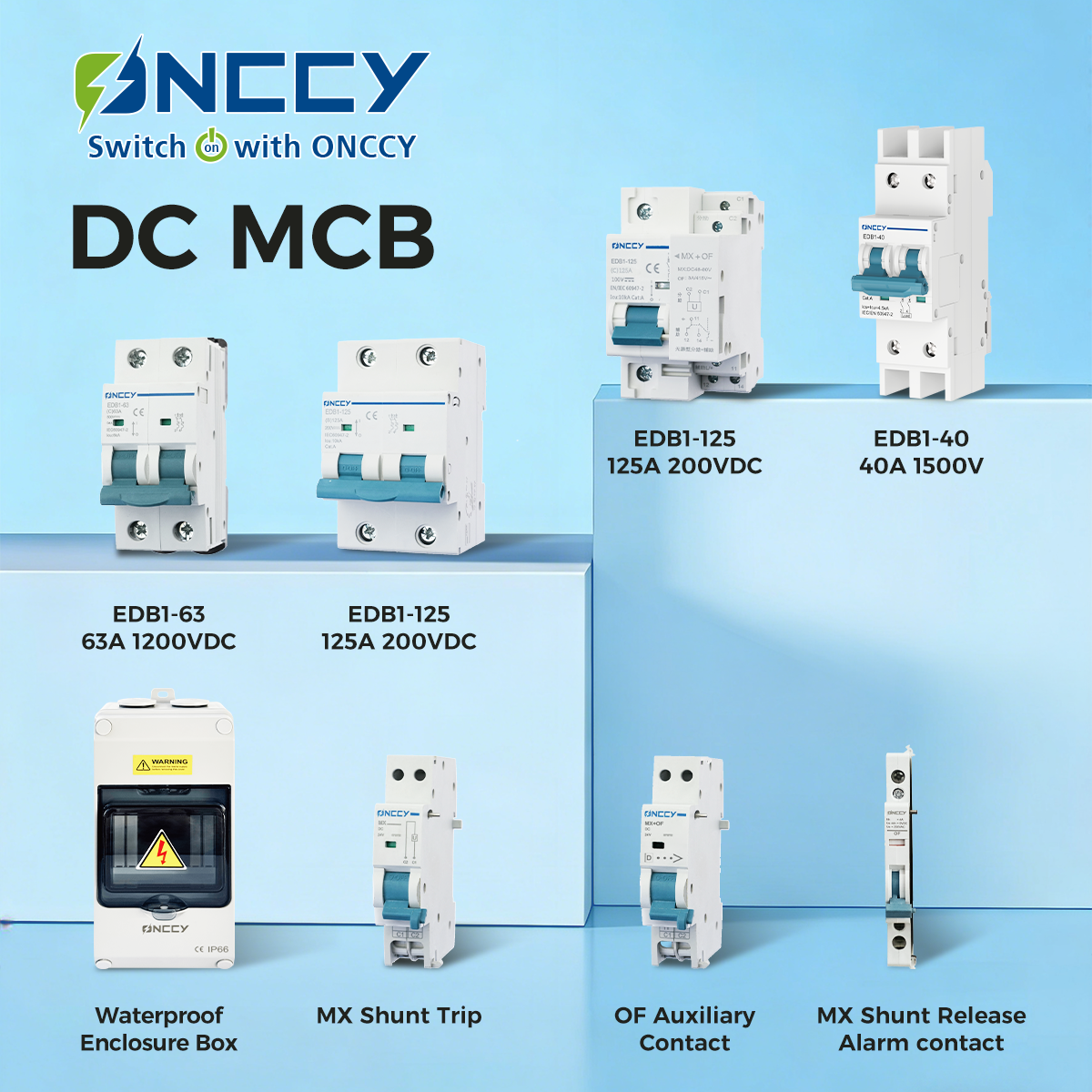
What is the difference between MCB and MCCB?
The main difference between MCB and MCCB lies in their current rating, protection capability, and application scope.
MCB (Miniature Circuit Breaker)
Used for low-current circuits up to 125A, typically found in residential and small commercial electrical systems.MCCB (Molded Case Circuit Breaker)
Designed for higher current applications from 100A up to 2500A or more, commonly used in industrial and commercial power distribution systems.
MCCBs also provide adjustable trip settings and higher breaking capacities, making them suitable for more demanding electrical environments.
What is an MCB (Miniature Circuit Breaker)?
A Miniature Circuit Breaker (MCB) is a compact circuit protection device used in low-voltage electrical systems.
MCBs automatically disconnect circuits when overload or short circuit conditions occur, preventing damage to wiring and electrical equipment.
Key Characteristics
Rated current: up to 125A
Breaking capacity: 6kA – 10kA
Fixed tripping characteristics
DIN rail installation
Compact size and low cost
Typical Applications
MCBs are commonly used in:
Residential distribution boards
Lighting circuits
Office electrical systems
Small appliances and branch circuits
Because of their simplicity and reliability, MCBs are widely used in household electrical protection systems.
What is an MCCB (Molded Case Circuit Breaker)?
A Molded Case Circuit Breaker (MCCB) is designed for higher-capacity circuits and more complex electrical protection requirements.
Unlike MCBs, MCCBs provide adjustable trip settings and higher interrupting capacity, making them suitable for commercial and industrial power distribution.
Key Characteristics
Current rating: 100A – 2500A
Breaking capacity: 10kA – 100kA
Adjustable overload protection
Adjustable instantaneous protection
Panel mounting design
Typical Applications
MCCBs are widely used in:
Industrial distribution panels
Motor protection systems
Generator protection
HVAC systems
Manufacturing equipment
MCB vs MCCB: Key Differences
| Feature | MCB | MCCB |
|---|---|---|
| Current Rating | Up to250A | Up to 800A |
| Breaking Capacity | Lower | Much Higher |
| Trip Settings | Fixed | Adjustable |
| Installation | DIN rail | Panel mounted |
| Application | Residential | Industrial |
| Protection Functions | Basic | Advanced |
The higher flexibility and protection capability make MCCB suitable for large electrical systems.
How Circuit Breakers Protect Electrical Systems
Both MCB and MCCB operate using thermal-magnetic protection mechanisms.
Thermal Protection
A bimetallic strip responds to heat caused by overload currents and trips the breaker.
Magnetic Protection
An electromagnetic coil activates instantly during short circuit events.
Electronic Protection (MCCB only)
Advanced MCCBs may include:
electronic trip units
ground fault protection
adjustable delay settings
communication modules
These features provide more precise system protection.
When to Use MCB vs MCCB
Choosing the correct circuit breaker depends on system requirements.
Use MCB when
current rating is below 125A
installation is residential
space is limited
cost efficiency is important
Use MCCB when
current rating exceeds 100A
adjustable protection is required
industrial equipment is used
high fault currents may occur
Why Circuit Breaker Quality Matters
Electrical protection devices directly impact system reliability and safety.
High-quality circuit breakers provide:
accurate trip curves
high breaking capacity
long service life
compliance with international standards such as IEC 60947 and UL standards
Poor-quality circuit breakers can lead to equipment damage, downtime, and safety risks.
About ONCCY
ONCCY is a professional electrical component manufacturer specializing in circuit protection and power distribution solutions.
Our product range includes:
Miniature Circuit Breakers (MCB)
Molded Case Circuit Breakers (MCCB)
DC circuit breakers
Surge protection devices (SPD)
Electrical protection accessories
ONCCY products are designed and manufactured according to international electrical standards, ensuring reliable performance in residential, commercial, and industrial applications.
FAQ
What is the main difference between MCB and MCCB?
MCB is designed for lower current circuits up to 125A, while MCCB supports higher current ratings and adjustable protection features.
Which circuit breaker is used in industrial systems?
MCCB is typically used in industrial power systems because it supports higher current capacity and advanced protection functions.
Can MCCB replace MCB?
Yes, but MCCBs are larger and more expensive, so they are usually installed only when higher protection capacity is required.
Do both protect against short circuits?
Yes. Both MCB and MCCB protect circuits from overload and short circuit faults.